Sauvignon Blanc tasting
Make the sheets View: A4 · Letter
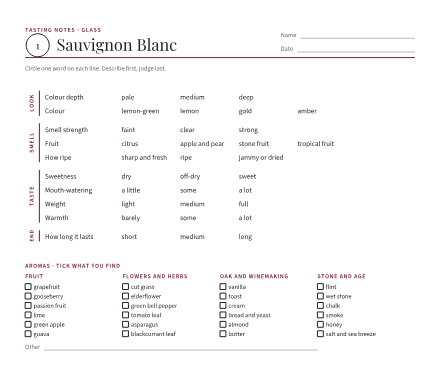
On this page the title is Sauvignon Blanc and the rows are the white wine set, so you circle colour depth and colour, smell strength, the fruit family and how ripe it is, then sweetness, mouth-watering, weight, warmth and how long it lasts. Sauvignon Blanc is one of the easiest whites to recognise on them: pale lemon-green colour, a strong smell, citrus and tropical fruit that is sharp and fresh rather than ripe, dry, a lot of mouth-watering, and light to medium weight. The aroma list is chosen for the grape: grapefruit, gooseberry, passion fruit, lime and guava in the fruit, cut grass, green bell pepper, elderflower and blackcurrant leaf among the green notes, vanilla, toast and cream for the rare oaked bottle, and wet stone, flint and smoke for the Loire. One page per wine, from Marlborough to Sancerre to the Adelaide Hills.
Serve it well chilled, about 8 to 10 °C, and pour a small taste. The smell is the loud part of Sauvignon, so spend time on the strength line and the aroma boxes before you sip. Then check the mouth-watering line: very few whites fill it as fully. If you can, taste a New Zealand bottle and a French one on the same evening, a page for each, and compare the green notes and the flint, which show the climate and the soil more than anything else. White Bordeaux, often blended with Semillon and sometimes aged in oak, makes a good third. Print a page for each bottle, plus the how-to page if the scales are new. Keep pours small and water on the table, and spit if you work through several bottles.
Questions
What does Sauvignon Blanc taste like?
Sharp and fresh: grapefruit, lime and gooseberry, passion fruit in warmer places, and green notes such as cut grass, green bell pepper and elderflower. Loire bottles often add a smoky, flinty edge.
How is New Zealand Sauvignon Blanc different from Sancerre?
Marlborough is louder, with tropical fruit and pungent green notes. Sancerre and Pouilly-Fumé are leaner and more mineral, with citrus, flint and less obvious fruit.
More pages like this
Wine tasting sheets by kindWine tastings by occasionWine tasting sheets by grape