Cabernet Sauvignon vs Merlot
Make the sheets View: A4 · Letter
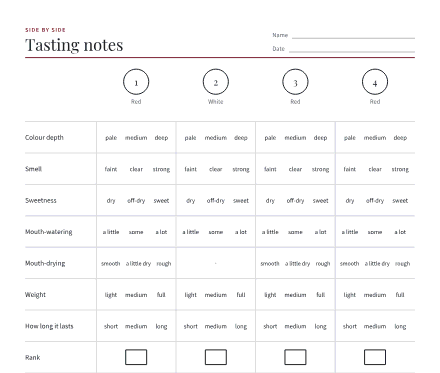
The comparison uses the flight sheet: four wines in columns on one portrait page, each with its numbered ring, colour and name if open, and the same rows across all of them. You circle a word on each of the seven rows for every wine, then give each a Rank and write The difference, in my words at the foot. For these two grapes the mouth-drying line does most of the work. Cabernet usually circles a little dry or rough, Merlot smooth or a little dry, and the colour depth and weight lines often follow. The aromas to look for, though they are not on this page, are blackcurrant, cedar and mint for Cabernet and plum, black cherry and chocolate for Merlot. It suits a taster or two who want to settle the question once.
Four wines make the clearest flight: a Cabernet and a Merlot from the same place, such as Napa or Chile, and a Left Bank Bordeaux, mostly Cabernet, against a Right Bank one from Saint-Émilion or Pomerol, mostly Merlot. Pour them blind if you can, with numbered tags, so the guessing is real. Fill each row across all four before you go to the next, then rank, then write the difference, before anyone tells you which was which. The bottle tags come with a blind flight. Print one sheet per taster, and add the full notes page for the wine you liked best. Big reds are tiring to taste in a row, so pour small, eat a little bread, drink water and spit between the glasses.
Questions
What is the difference between Cabernet Sauvignon and Merlot?
Cabernet is firmer: deeper colour, more tannin, blackcurrant, cedar and sometimes green pepper. Merlot is rounder and softer, with plum, black cherry and chocolate, and usually less grip.
Which is better for beginners, Cabernet or Merlot?
Merlot is easier to enjoy young, since its tannin is softer. Cabernet often needs food or a few years. Tasting them side by side is the quickest way to know which you prefer.
More pages like this
Wine tasting sheets by kindWine tastings by occasionWine tasting sheets by grape