Oaked vs unoaked Chardonnay
Make the sheets View: A4 · Letter
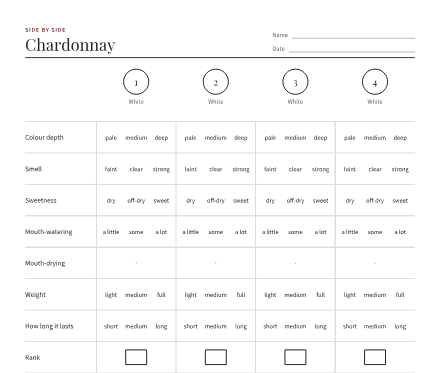
This is the smallest flight there is, two wines on one portrait page headed Chardonnay, so each column is wide enough for big circles and a few words beside them. Both columns carry the numbered ring and the colour, white, and the name when you taste open. The rows are the compact scales, with mouth-drying left empty for a white: colour depth, smell strength, sweetness, mouth-watering, weight and how long it lasts, then a Rank box each and The difference, in my words across the foot. With oak the lines to watch are colour depth, often medium against pale, weight, usually full against light or medium, and how long it lasts. Sweetness should come out dry for both, which is a useful check, since oak can taste sweet without being sweet. It suits a taster or a couple wanting to learn what oak does, and needs only two bottles.
Chill both to the same temperature, about 10 to 12 °C, and pour them at once into identical glasses. Ask someone to pour them blind, or simply cover the labels, so you decide which is oaked from the glass rather than the bottle. Look first, side by side over a white sheet, then smell, then taste, filling each row for both wines before moving on. Vanilla, toast and butter are the aromas oak brings, and their absence is just as telling. Write the difference before you check, and keep the sheet: it is a reference for every Chardonnay you taste afterwards. Print one page per person. Two small pours make a short session, still worth a glass of water and a spit between the two.
Questions
What is the difference between oaked and unoaked Chardonnay?
Oak adds vanilla, toast, butter and nuts, a deeper golden colour and a fuller, rounder feel. Unoaked Chardonnay keeps the grape's own lemon, green apple and stony freshness, lighter and sharper.
Which wines should I buy for the comparison?
Ideally the same producer or region in both styles, such as an unoaked and an oaked Chardonnay from one Australian or Californian winery, or a Chablis against a Meursault. Same grape, different cellar.
More pages like this
Wine tasting sheets by kindWine tastings by occasionWine tasting sheets by grape