Cabernet Sauvignon tasting
Make the sheets View: A4 · Letter
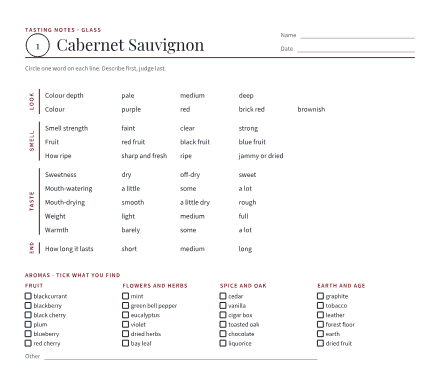
The tasting page here carries Cabernet Sauvignon as its title, with the full set of red wine rows below: colour depth and colour, smell strength, the fruit family and how ripe it is, then sweetness, mouth-watering, mouth-drying, weight, warmth and how long it lasts. Cabernet tends to sit at the deep end of most of them: deep colour, black fruit, a lot of mouth-drying grip, full weight and a long finish. The aroma list is tuned to the grape, with blackcurrant, blackberry and black cherry in the fruit family, mint, eucalyptus, green bell pepper and bay leaf among the herbs, cedar, cigar box, vanilla and toasted oak from the barrel, and tobacco and graphite with age. The guess and the answer, the verdict and the two closing lines are as on every notes page. One page per wine, for someone learning the grape bottle by bottle.
Open the bottle an hour before, or decant it, since a young Cabernet can be tight at first. Pour a small taste, look at it over a white sheet, and work down the page from colour to finish. Pay attention to the mouth-drying line: it is the line that sets Cabernet apart from softer reds. A Coonawarra or Chilean bottle often shows more mint, a Napa one riper fruit and more warmth, a Bordeaux more cedar and freshness. Print a page per wine and compare them afterwards, or move to the flight sheet to taste two to four at once. The how-to page explains mouth-drying, the tannin, in one sentence. With a tannic red, a piece of bread and water between tastes helps, and spitting keeps the palate fresh.
Questions
What are the typical aromas of Cabernet Sauvignon?
Blackcurrant above all, with blackberry and black cherry, often green bell pepper or mint in cooler places, and cedar, vanilla, tobacco and graphite from oak and age.
Why does Cabernet Sauvignon feel so drying?
The grape has thick skins and plenty of tannin, which grips the gums and dries the mouth. Age and food soften it, which is why a young Cabernet tastes better with something to eat.
More pages like this
Wine tasting sheets by kindWine tastings by occasionWine tasting sheets by grape